


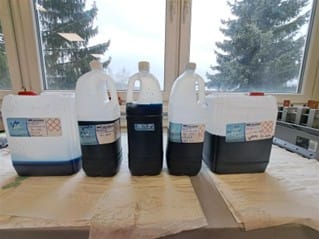
Vanadium electrolyte is the core component of vanadium redox flow batteries (VRFBs), as it determines the energy storage capacity, ionic conductivity, and a significant portion of the total system cost. The electrolyte quality is directly linked to the battery’s performance and lifetime, making the use of an optimal electrolyte essential to ensure high stability and efficiency.
Most vanadium sources are located in Russia, China, Australia, and South Africa, which limits availability in Europe and makes transportation a major logistical and economic challenge. Since vanadium electrolyte is primarily a sulfuric acid–based aqueous solution, transporting it over long distances is not cost-effective. As a result, purchasing vanadium oxides and producing the electrolyte in situ has emerged as a promising and strategic alternative.
Our R&D team in collaboration with external partner are therefore focusing on developing and optimizing methods to produce vanadium electrolyte directly from vanadium oxides. By combining a chemical reactor with the IH 40-cell stack, we can manufacture 3.5 vanadium electrolyte on site. Reaction conditions, reactants, and temperatures have been optimized to create a cost-effective and scalable process.
Additionally, because the impurities present in vanadium oxides depend on their quality and origin, we conduct detailed analyses of metallic contaminants that could promote hydrogen evolution in VRFBs. This characterization step is crucial to ensuring a high-quality electrolyte and guaranteeing safe, stable, and long-lasting battery operation.
ACKNOWLEDGEMENT:
This work was supported by the project: IPCEI_IE_FLOW_BESS_012021_2. Phase