INTERNATIONAL FLOW BATTERY FORUM
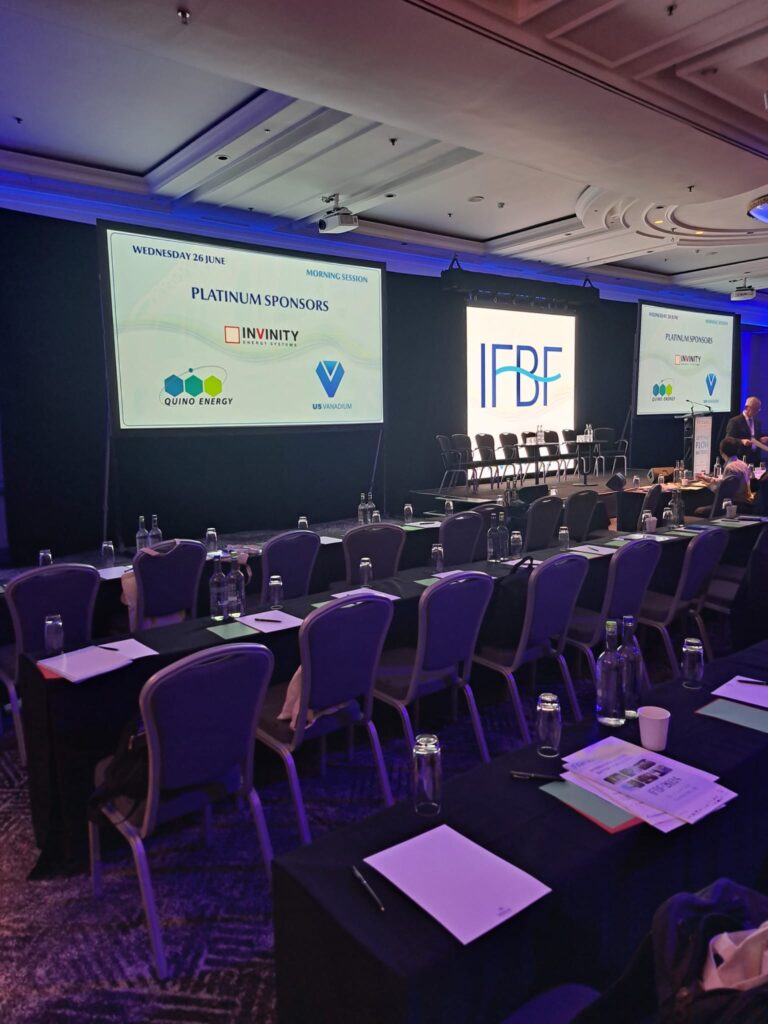
From June 25th to 27th, 2024, the International Flow Battery Forum took place at the Hilton Hotel in Glasgow, marking one of the most significant events for the redox flow battery (RFB) community. InoHub proudly participated in the forum, with several members of our R&D team and management in attendance, underlining our commitment to innovation […]
CHARACTERIZATION OF ORGANIC ELECTROLYTES FOR RFB APPLICATIONS
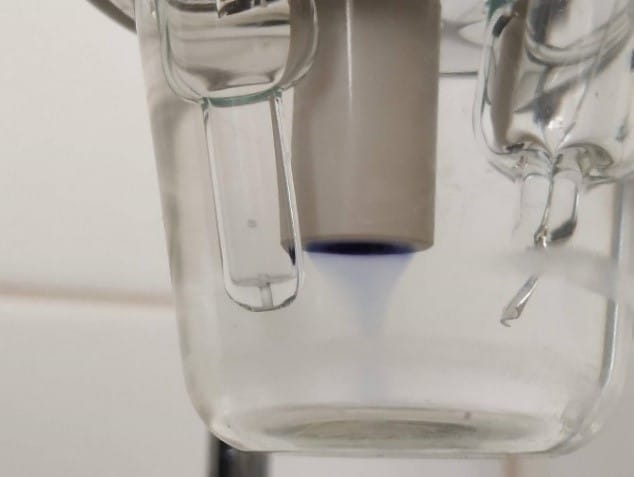
After synthesizing a variety of organic electrolytes, the next crucial step is to characterize their electrochemical properties. This includes evaluating parameters such as the kinetic constant, the diffusion rates of charged and uncharged species, and their solubility in water. These factors determine the feasibility of implementing the organic molecules in a redox flow battery (RFB). […]
INOHUB ENERGY AND THE DEVELOPMENT OF AQUEOUS-SOLUBLE ORGANIC ELECTROLYTES FOR RFBs
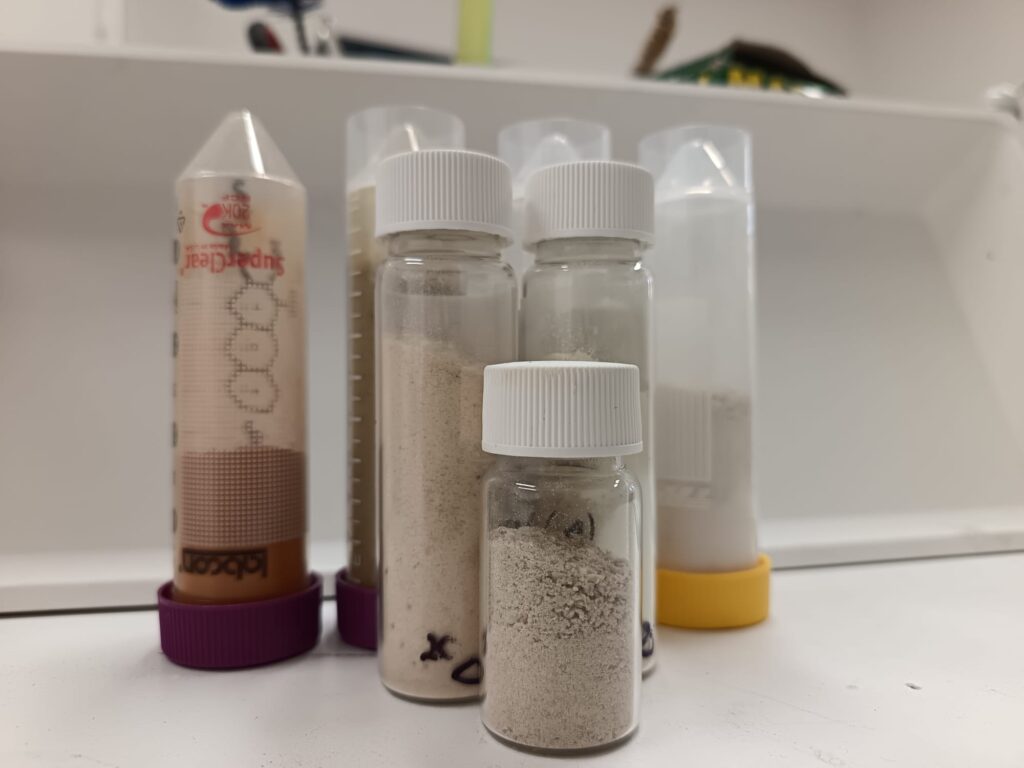
At INO-HUB Energy, we are deeply committed to developing innovative electrolyte alternatives based on aqueous-soluble redox-active organic molecules. Organic chemistry unlocks the potential for creating electrolytes from earth-abundant elements, fostering sustainable and environmentally friendly solutions. One of the key advantages of these organic molecules is their high tunability. Their electrochemical properties—such as redox potential, solubility, […]
STACK DESIGN
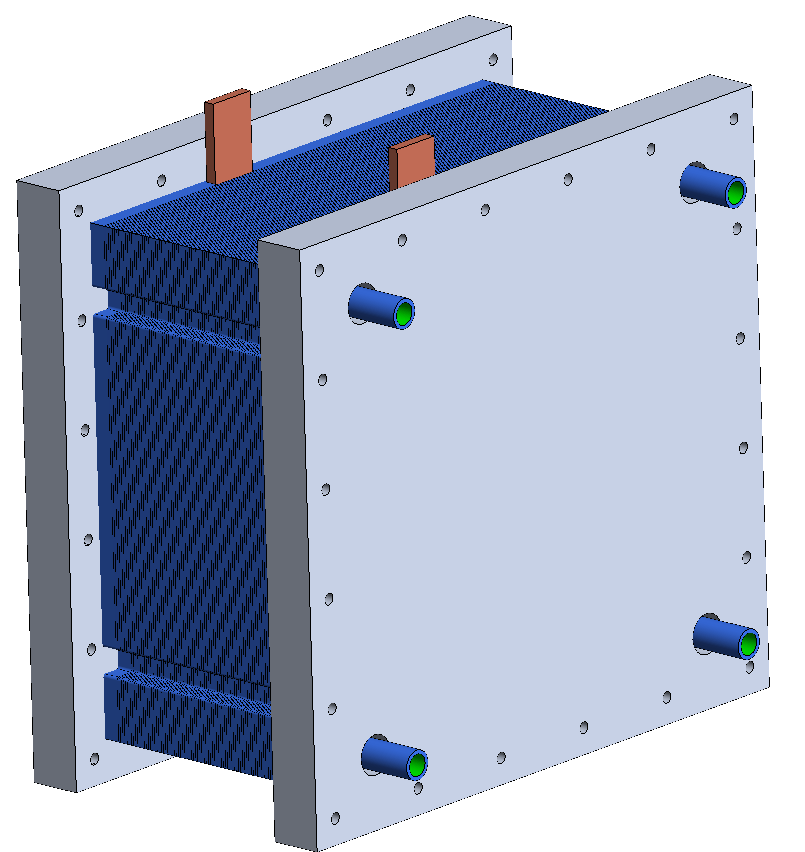
The design of a new stack is a challenging task in itself. The first decision was weather we want to build a simple and cheap stacks or a more sophisticated stacks with higher power output. We decided to do the latter. Meaning that the power density of the stack should be at least 200mW/cm2 of […]
LABORATORY CELL DESIGN AND OPTIMIZATION
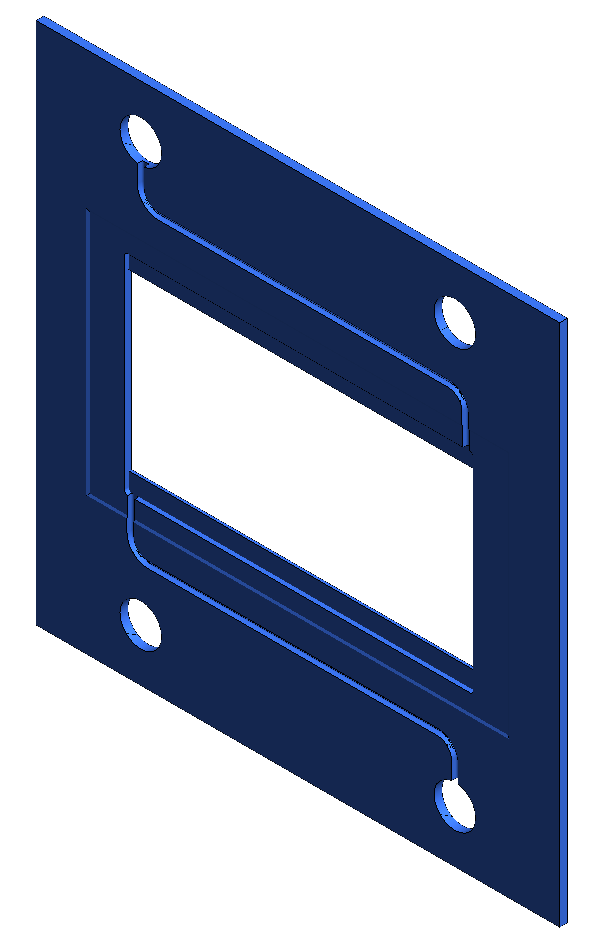
For the evaluation of different materials e.g. membranes and electrodes we decided to design our own laboratory cell. The first design was supposed to be easy to manufacture and should be versatile enough to test all required materials and electrolytes. Therefore, we chose a design that would allow us to use different thicknesses of membranes […]
OPTIMIZATION OF THE BATTERY DESIGN – PRESSURE DROP SIMULATIONS
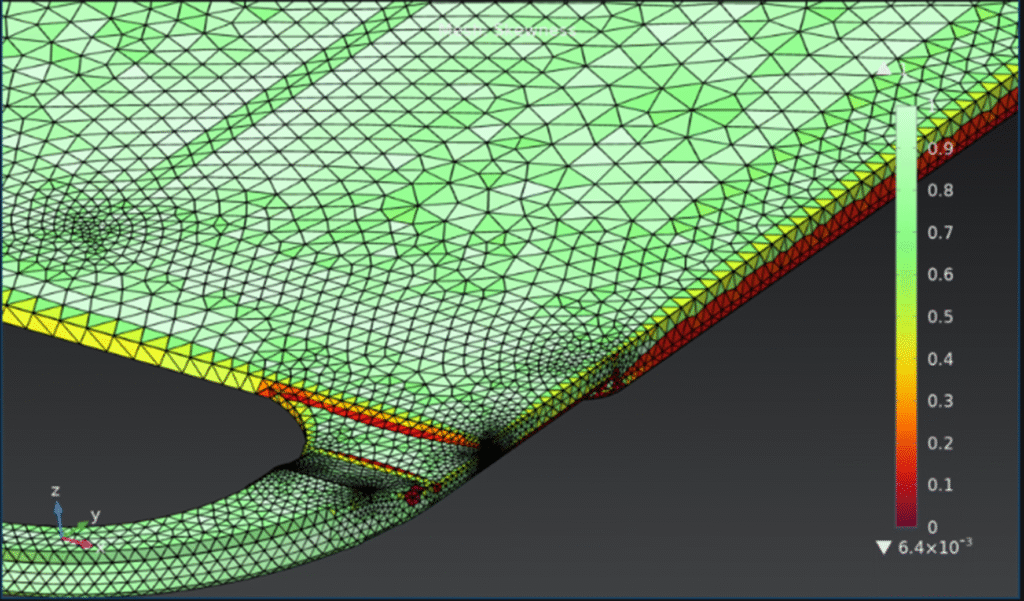
The production of every battery cell, regardless of its size, starts from the inception of models of all components. Then, utilizing modern software, we model the future cell behavior before the actual production of parts and ordering of the materials. The first battery parameter that could be evaluated from the model is the pressure drop […]
EVALUATION OF THE SMALL CELL PARAMETERS – PRESSURE DROP TESTS
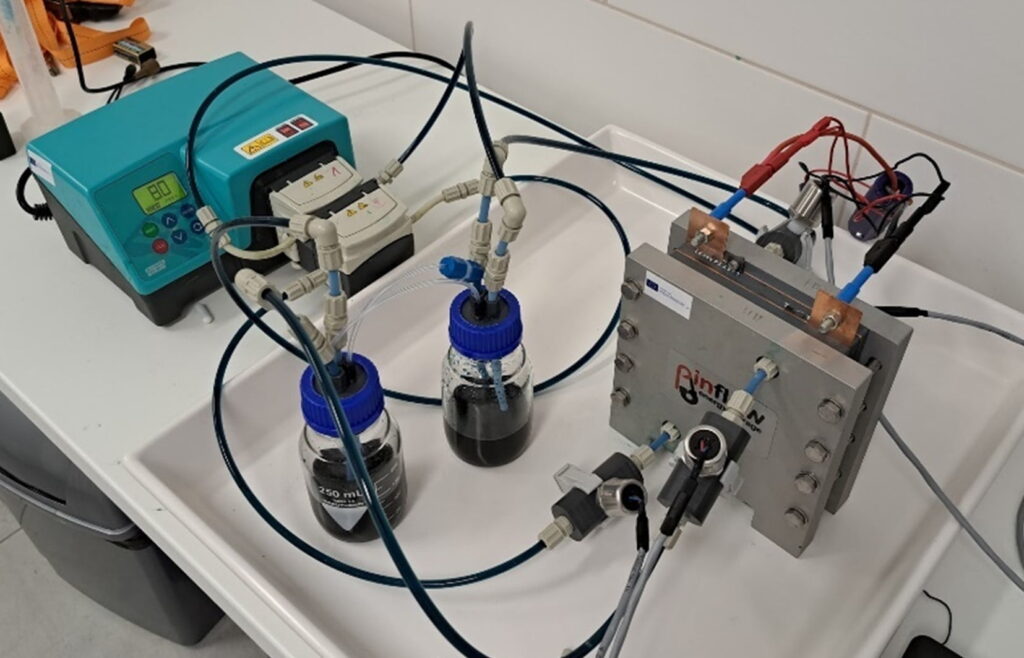
The primary parameters of the redox flow batteries are Coulombic Efficiency (the ratio of the discharge and charge capacities of the same cycle), Voltage Efficiency (the ratio between the battery voltage during the charging and discharging), and Energy Efficiency (the measure of energy loss in a charge-discharge cycle). All these parameters are related to the […]
LABORATORY LONG-TERM REDOX FLOW BATTERY TESTING
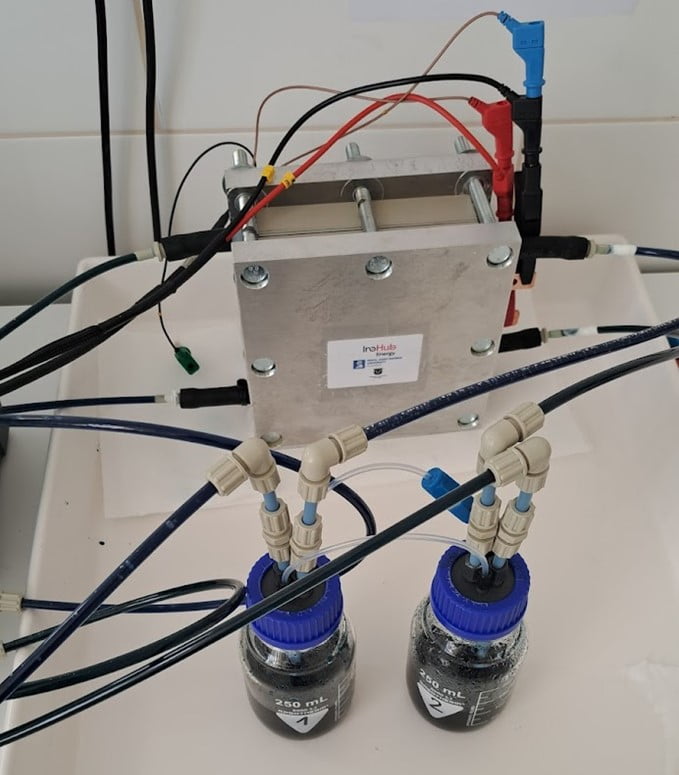
Every groundbreaking technology starts from lab experiments. Assembling the small redox flow battery cells offers an opportunity to test all battery components, such as membranes, bipolar plates, sealings, and electrode materials, as well as the cell’s overall design. The insights gained from these tests pave the way for the application of proven materials in larger […]
PARTICIPATION IN CONFERENCE MATSUS 2023
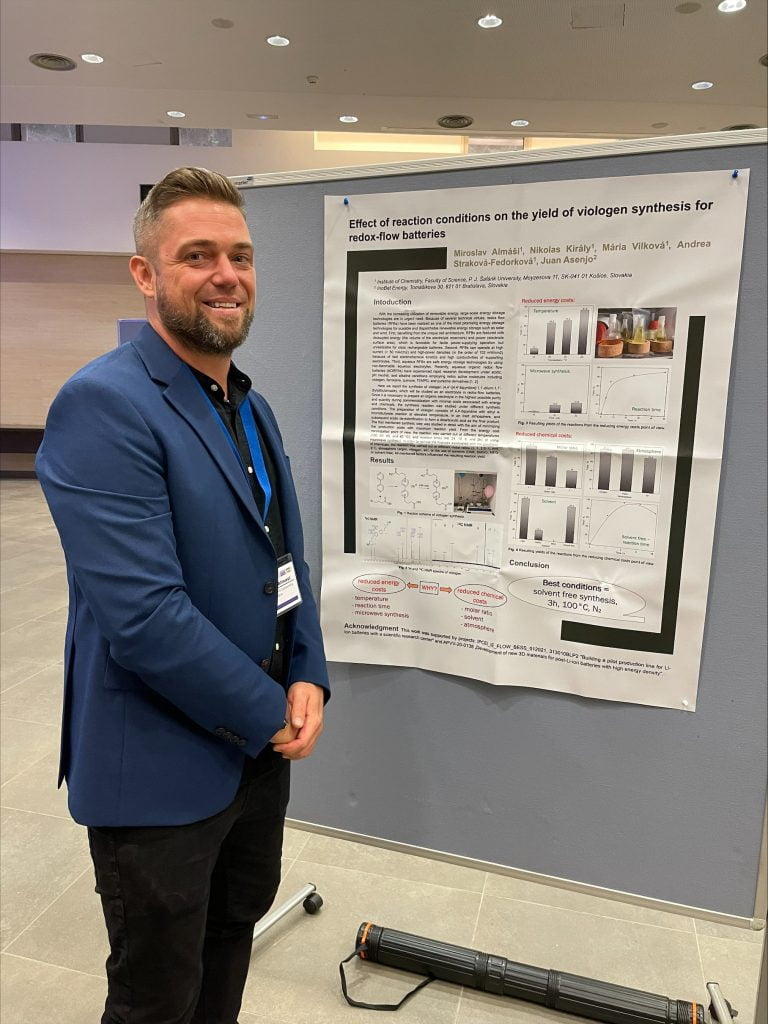
The Sustainable Development Materials Conference (MATSUS23) was held in Torremolinos, Spain, from October 16th to October 20th, 2023. The event featured a blend of symposia covering both fundamental and multidisciplinary sciences, along with applied symposia dedicated to Sustainable Development topics. Serving as a platform to channel the knowledge and tools of advanced materials in science […]
PARTICIPATION AT THE HIGREEW WORKSHOP
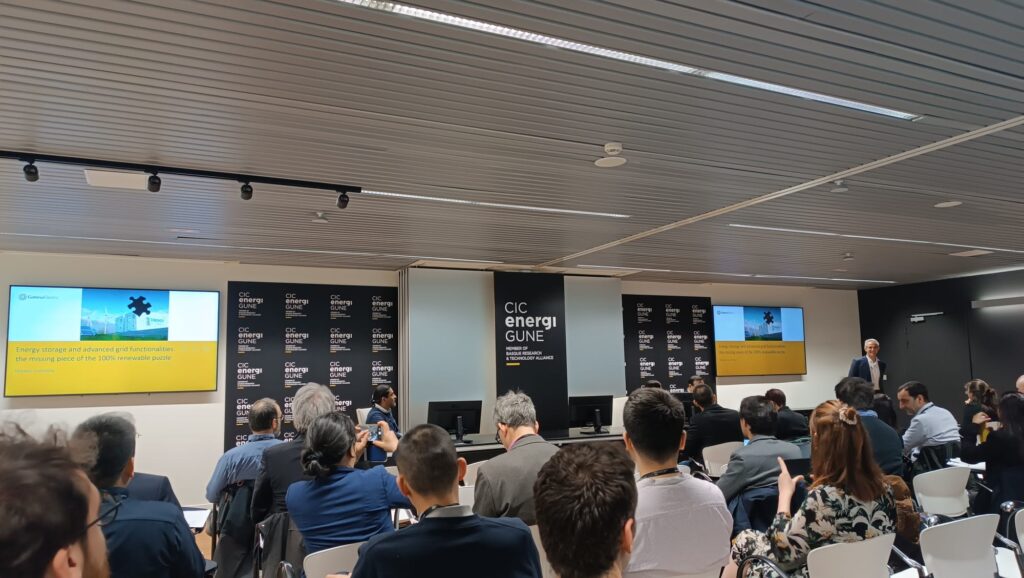
Second and final HIGREEW Workshop took place on 16th and 17th May 2023 at CIC Energigune research centre. HIGREEW project in one of the Horizon2020 European projects that have been trying to develop an efficient energy storage system. One of the most promising candidates to fulfil this task are Redox Flow Batteries. HIGREEW project has […]