ANALYSIS AND IMPROVEMENT OF THE FLOW DISTRIBUTION BY USING COMPUTATIONAL FLUID DYNAMICS SIMULATIONS

Besides minimizing the overall pressure drop, which leads to higher roundtrip efficiency due to reduced power consumption of the pumps, it is also important to optimize the flow distribution within the stack. Having a homogenous flow of electrolyte through the electrodes ensures an optimal utilization of the active material and equal voltage distribution. This leads […]
OPTIMIZATION OF THE PIPING-SYSTEM BY MEANS OF CFD-SIMULATIONS
Besides optimizing the stack in terms of pressure drop we are also working on optimizing the whole hydraulic system of the battery. In a VRFB, the electrolyte is pumped in two separate hydraulic circuits for positive and negative side from the tanks into the several stacks and back to the tanks, possibly also passing heat-exchangers. […]
EXPERIMENTAL DETERMINATION OF THE PERMEABILITY-CONSTANT OF THE FELT
In a classic stack with flow-through design, the electrode felt has a significant share on the pressure drop of the battery stack. For simulating the flow through these electrodes, the permeability constant is needed. This number is a material constant, which can vary between felts of different manufacturers. As the felt manufacturers don’t provide this […]
TEST RIG FOR PRESSURE DROP MEASUREMENTS
Providing sufficient flow to the electrodes is crucial for the functioning of a flow battery. Hence, the pressure drop is a core factor when designing a RFB. For measuring the pressure drop of the different versions of our prototypes, that are continuously improved, we have designed and built up a special test bench. This test […]
AIR TIGHTNESS TESTS
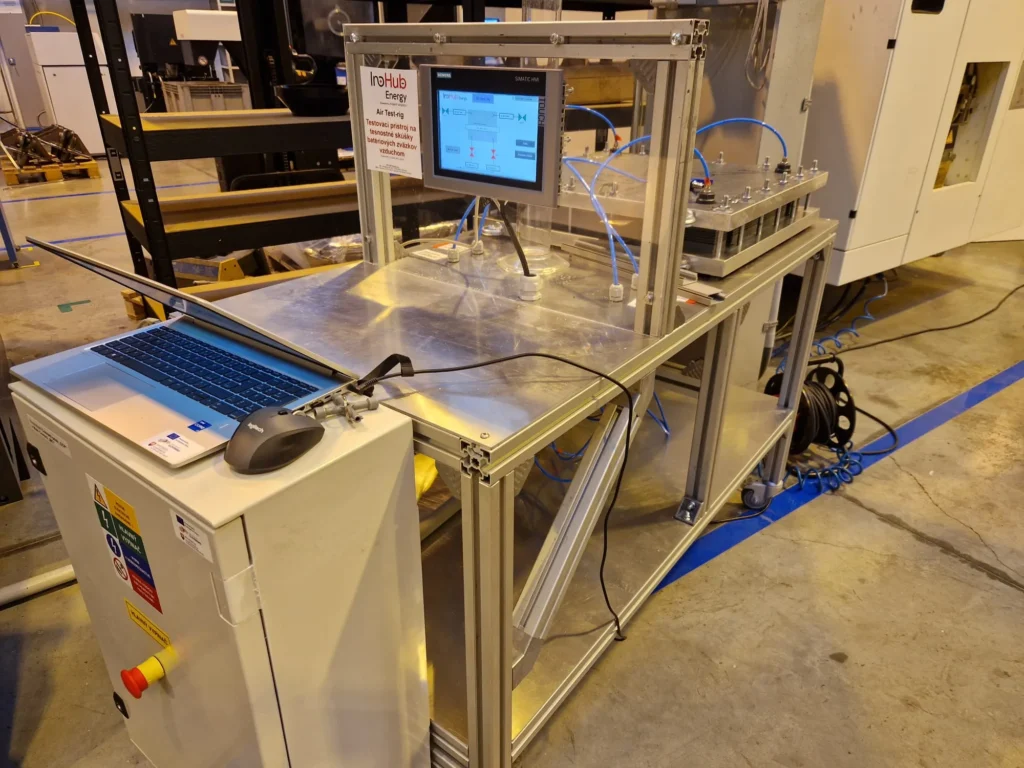
After assembling the battery stack, it is crucial to verify the quality of the assembly. Several factors can impact the tightness of the stack, including: Although these issues should be addressed during the quality control process prior to assembly, a final inspection of the battery stack after assembly is necessary. The most effective method for […]
SHUNT CURRENT CALCULATION
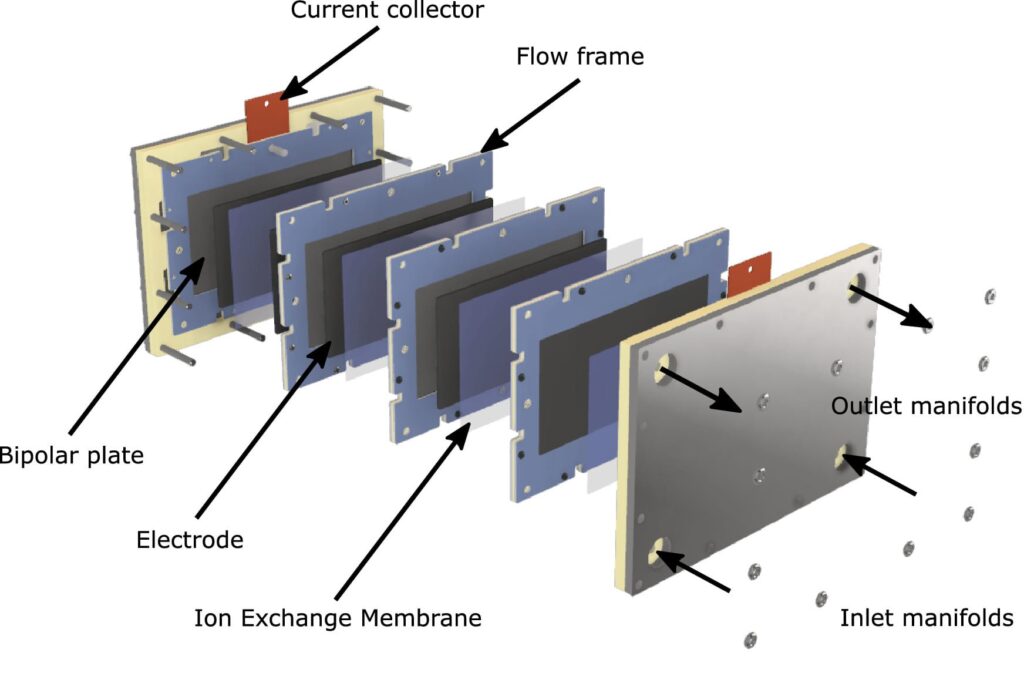
In all redox flow batteries, including vanadium systems, the electrolyte must be electrically conductive. As the system scales up, the number of cells in an electrochemical reactor increases from one to several. When the battery is in operation, the electrolyte fills the channels and manifolds that connect the cells, resulting in the generation of shunt […]
PARTICIPATION IN CONFERENCE ENERGOFORUM 2024
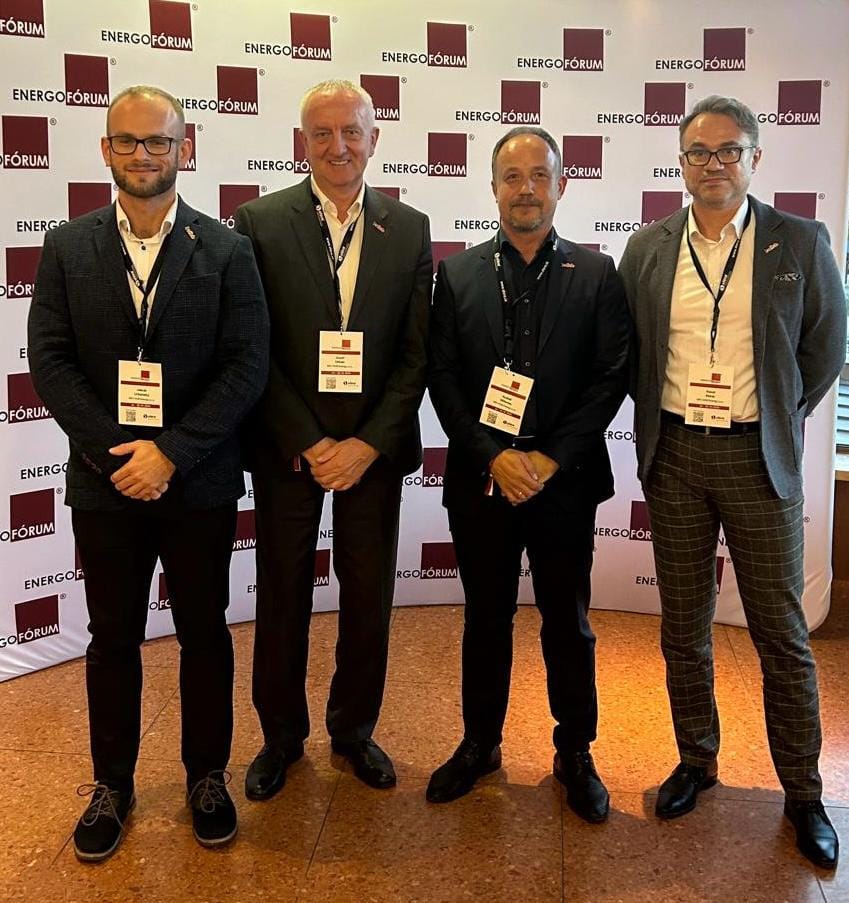
This year, the 18th edition of ENERGOFÓRUM conference once again brought together the most current issues in the energy sector into a single event. The conference was held on October 24–25, 2024, in the Low Tatras and attracted nearly 350 experts, representatives of state institutions, as well as representatives of the private and academic sector. […]
SEALING TESTING
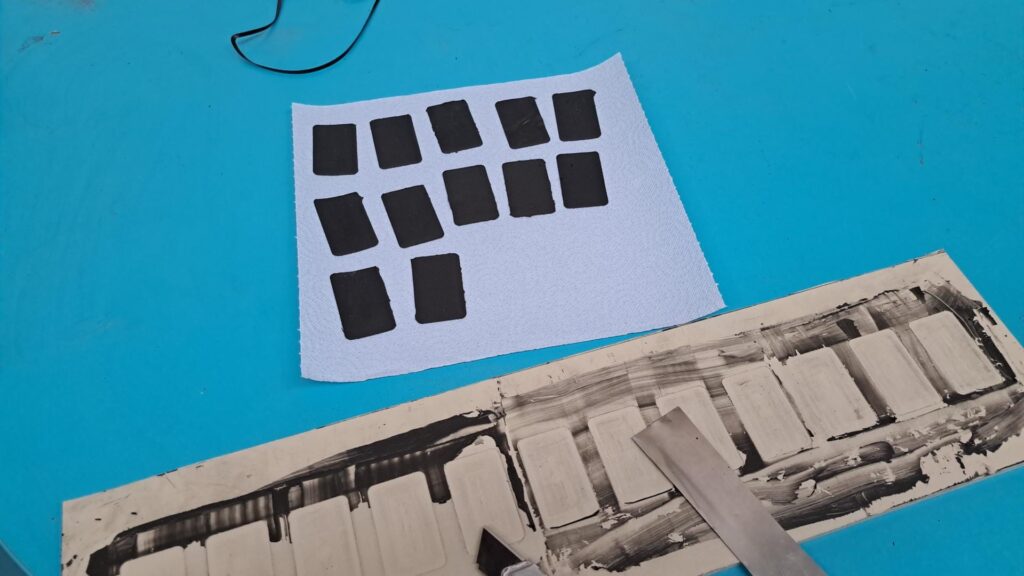
A sealing material is a critical part of both small laboratory cells and big redox flow battery stacks, as well as it provides the sealing of the components within the electrochemical cell. In the case of vanadium electrolytes, the environment is highly corrosive, consisting of 1.6-1.8M vanadium and 3M sulfuric acid, along with an addition […]
PARTICIPATION IN CONFERENCE NFA 2024
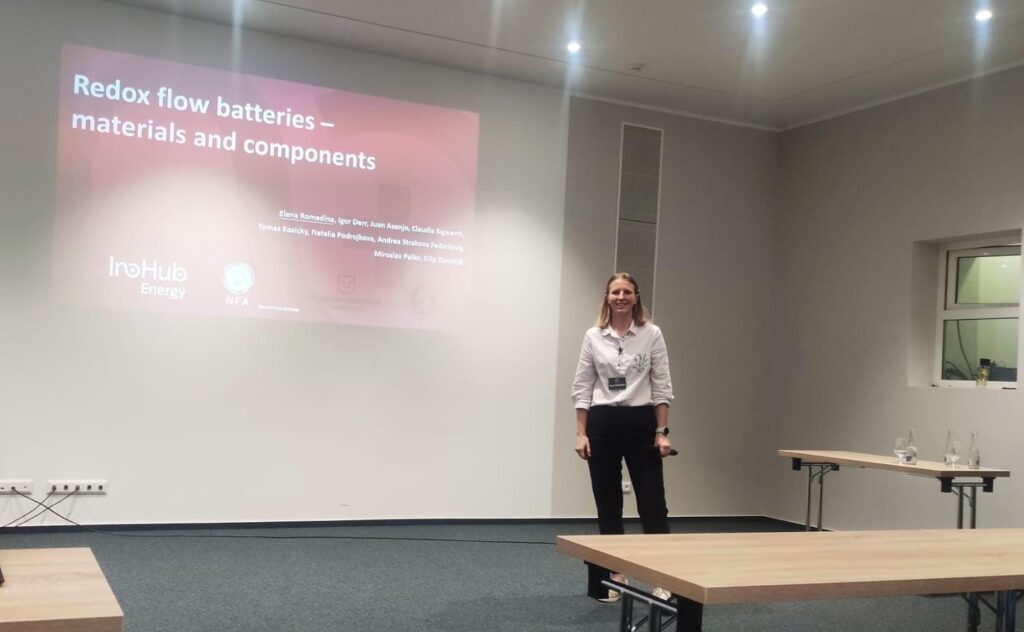
In October 2024, Elena Romadina, the Senior Chemical Engineer at Inohub Energy, participated in the 8th International Conference on Novel Materials: Fundamentals and Applications, which was held at Štrbské Pleso in the High Tatras. During the conference, Elena delivered a presentation on the laboratory testing of redox flow batteries. The necessary nesting equipment was discussed, […]
OPTIMIZING BATTERY COMPONENTS THROUGH INNOVATIVE RESEARCH
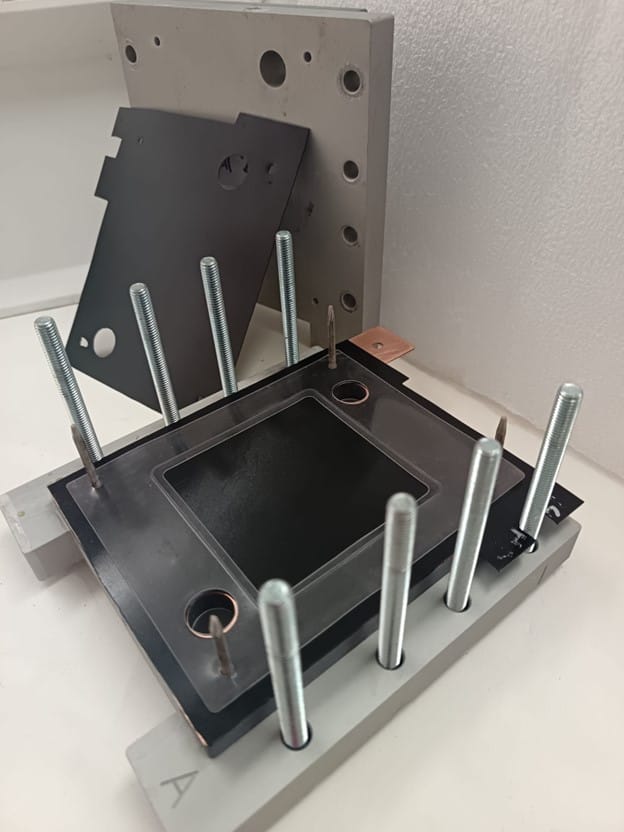
One of the main tasks of the R&D team is the research and optimization of new battery components aimed at reducing costs and/or enhancing performance in terms of lifespan, energy density, and temperature range. Among the various topics under investigation—such as new organic electrolytes and alternative ion-exchange membranes—the production of extruded bipolar plates holds significant […]