Turning a battery technology into a commercially viable product takes more than successful laboratory testing. It requires a clear path from individual components to complete systems that can be manufactured, installed, operated and maintained. At INO-HUB Energy, this transition is shaping the development of our vanadium redox flow battery (VRFB) technology.
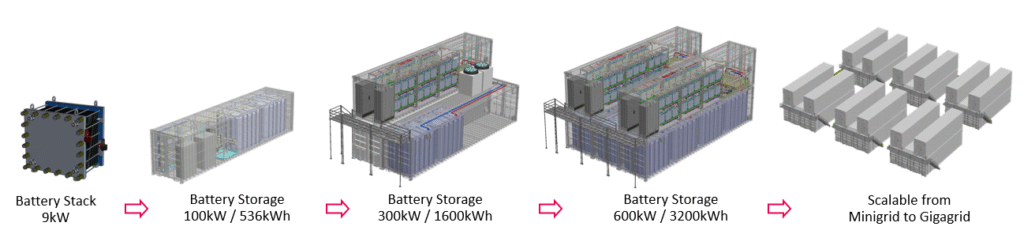
Our journey began with the development of our own battery stack—the core component where energy is stored and released through electrochemical reactions. The stack was tested and verified by TÜV SÜD, marking an important milestone in its development and providing a foundation for the next stages of our work.
To support further testing and improvement, we also developed a dedicated test rig for individual stacks. This platform allows us to evaluate stack performance and use the results to guide design decisions. Building our own testing capability helps connect research with practical engineering.
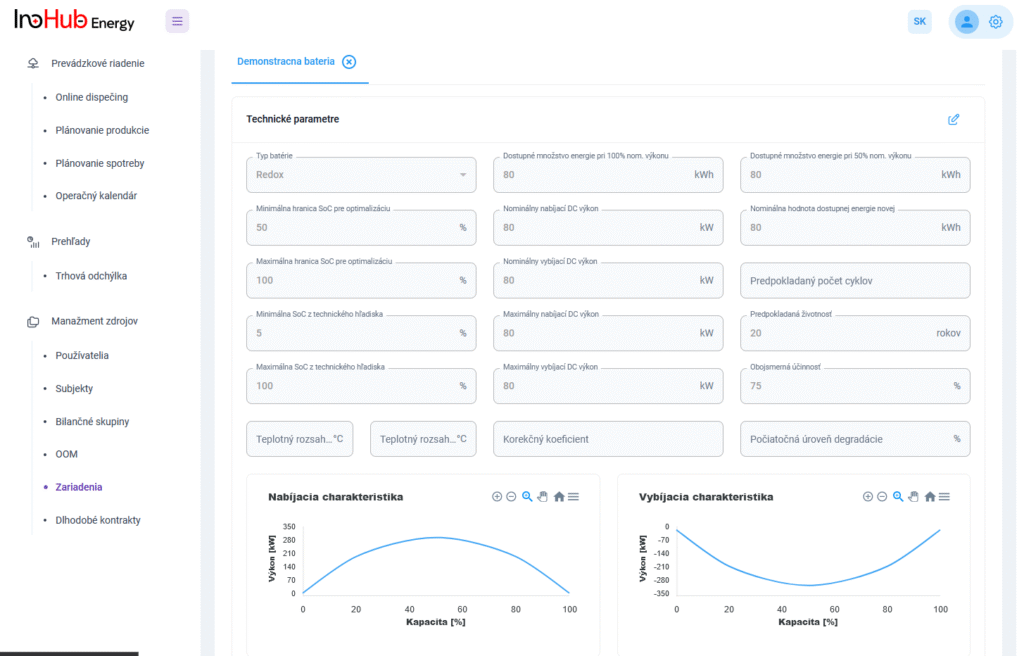
The next step was the design of our first commercial VRFB energy storage system, rated at 100 kW / 536 kWh. Moving from a stack to a complete system broadens the engineering challenge: the battery, electrolyte circulation, controls and supporting equipment must work together reliably. It also brings manufacturing, installation and service requirements into the design process.
We are now finalising the design and beginning development of our first utility-scale product, building on the experience gained through our stack and system engineering work.
For INO-HUB Energy, commercial viability is a goal that guides each stage of development. Our focus is on translating verified technology into dependable, practical energy storage products—and carrying the lessons from R&D into every system we design.
ACKNOWLEDGEMENT:
This work was supported by the project: IPCEI_IE_FLOW_BESS_012021_2.Phase